Friday, October 29, 2010

Working Families Vote!


Vote. Get your family to vote, your friends, your neighbors and your co-workers to vote. Vote for the candidates who will fight for the interests of middle class working families in Arkansas and the nation.

Saturday, October 23, 2010

AFSCME and the Election


This election is about the key issues that affect you and your communities: job creation, your rights on the job, policies that create jobs here at home.

The Wall Street bankers who drove the economy off the cliff – the corporations outsourcing good jobs overseas, anti-union contractors who want to take away your hard-earned wages – they are spending millions to take over Congress and even state offices here in Arkansas.

We can’t match them dollar for dollar. But we have the power of a mobilized membership.

We owe it to ourselves and our children to vote on the issues that matter to us as working people. It’s not about partisanship. It’s about our jobs and our future.

Get informed, get involved and vote. We can’t afford to sit this one out. How you vote is your personal decision, but your union has endorsed the following candidates, because we believe they have a better understanding of the issues affecting working families and will stand up for us. We have also done an analysis of the proposed constitutional amendments and taken positions on two of them.

AFSCME LOCAL 965 POSITIONS ON BALLOT ISSUES:

AGAINST Issue No. 2 for a Constitutional Amendment to remove the interest rate ceiling on bonds, defer the rate on some loans to the federal government, and affirm a 17% interest ceiling on consumer loans. Vote NO on Issue 2 to prevent the increase in interest rate ceilings.

AGAINST Issue No. 3, a proposed Constitutional Amendment abolishing the people's right to vote and decide whether to approve bonds creating public debt and gives that power exclusively to the legislature. Vote NO on Issue 3 to protect the power of the people from the lobbyists.

ENDORSED BY AFSCME LOCAL 965:

Steve Zega for Circuit Judge

Earl Hunton for State Representative, District 87
Jim House for State Representative, District 89
Mark Swaney for State Representative, District 90
Greg Leding for State Representative, District 92

Barbara Fitzpatrick for Quorum Court, JP District 6

Mark Kinion for City Council, Ward 2
Rhonda Adams for City Council, Ward 4

ENDORSED BY ARKANSAS AFL-CIO:

U.S. Senate: No Position

U.S. Congress, Third District: David Whitaker

Arkansas Constitutional Offices

Governor: Governor Mike Beebe

Lieutenant Governor: Senator Shane Broadway

Attorney General: Attorney General Dustin McDaniel

Secretary of State: County Clerk Pat O'Brien

State Treasurer: State Treasurer Martha Shoffner

Auditor of State: Charlie Daniels

Commissioner of State Lands: L.J. Bryant

Nonpartisan Judicial Runoff

State Supreme Court Assoc. Justice Position 6: Court of Appeals Judge Karen Baker

Tuesday, October 5, 2010

This Week in Arkansas Labor History


1963 -- AFSCME Local 965 calls first public employee strike in the South, as 300 physical plant employees set picket lines at University of Arkansas, Fayetteville, to protest UA administration recalcitrance on wages and benefits.


Employee Discontent
In 1962, ten employees of the University of Arkansas formed a labor union as a result of failed contract negotiations. Local 965 received its official union charter on April 1, 1962.1 It was not until October of 1963 that Local 965 garnered statewide attention and momentum in it labor negotiations. The unfair labor practices and wage rates of the University of Arkansas forced Local 965, under the leadership of founder and President Rex Rice, to threaten and eventually engage in a non-teaching employee strike.2 A formal press release by Rice outlined the discontent of the employees, the anticipation of the strike, and the choice of timing. Rice knew that the weekend of October 6-7 was an opportune time as the dependency of non-teaching employees would be high. The University was hosting members of the Arkansas General Assembly and state constitutional officers at the annual Legislative Weekend. In addition to these high profile guests the University was playing host to 225 attorneys with the Legislative Institute and it was the SEC season football opener. The impact of the strike would be greater during this period although Rice expresses that he is unclear of how long the strike would last.3 On Friday, October 5th, the strike became a reality with 76 employees forming a picket line.4 The immediate response by University of Arkansas President Dr. David W. Mullins was one of justification. Mullins did little to acknowledge the stance of the union but simply stated that the University’s lack of response was due to legal boundaries that negated negotiations with labor unions. John Hale, international representative for the American Federation of State, County and Municipal Employees stood behind the picketers of Local 965 and a significant amount of non-union employees. Hale stated that the effects of the strike were beginning to be felt by University Administrators.5 While this may have been assumed, little evidence in the statements of University officials support this belief. Mullins simply stated that service levels on Monday (day four) were the same as day one of the strike. On Tuesday, October 9th, Chancellor Thomas F. Butt issued a restraining order against the picketing employees.6 Butt also being a judge issued the injunction stating that the picketer’s methods of demonstration were unlawful. Some of the arguments for the unlawfulness of the demonstration were that it was ruining University property, interfered with the use of property, and that picketers were threatening and intimidating other employees of the University. The injunction did have an impact in that it broke the picket line from re-forming but it had little impact on employees returning to work.7 By this time the effects of the strike were more readily apparent. With a wide base of support by non-union employees and other union members who are not directly employed by the University, more and more supporters were leaving to join the strike. A significant amount of employees in certain dorm cafeterias had left and union workers employed by contracting agencies to work on the construction of buildings around campus failed to show up in support of the union efforts.8 On October 12, a special meeting was held by the executive committee of the Arkansas AFL-CIO to appeal to Governor Faubus for assistance in convincing the University to enter into negotiations with the Union.9 While Faubus did not attend the meeting due to prior engagements, state Labor Commissioner Bill Laney did. Laney refuted Mullins claim that the University cannot engage in contract negotiations with a labor union and added that the University had been found in violation of state labor laws in the past. Laney did have the opportunity to discuss the labor issues with Mullins but there is little evidence to support anything positively conclusive from this talk. Mullins did state that the University could not engage in contract labor unless there was some certainty that money appropriated by the legislature was in fact available. The following Monday, Faubus issued a statement saying he would not become personally involved but would work to get the two sides together to discuss the dispute.10 At the suggestion of Faubus, the University Board of Trustees, led by Dallas P. Raney, conceded to launching an investigation.11 On October 18th, employees returned to work, ending the 13-day strike.12

Discussion
Arguments
The primary argument of Local 965 employees was inappropriate wages and unfair employment practices. Union officials stated that the pay for University employees started at 75 cents an hour, a wage far below what was apparently livable. There was also numerous accounts of employees (particularly women) who worked 12-15 hours but only compensated for eight. Employees sent letters to Governor Faubus telling of the difficulty of raising kids on the wages paid by the University.13 The strike was the public display of discontent and became the rallying point for employees outside of Local 965. University employees who were not members joined the union as it grew in momentum. This brought greater impact for the union as their effect was multiplied. In displays of solidarity with Local 965, other labor unions joined in the strike by not showing up for work. The main argument of the union was rather simple, enter into negotiations or endure the strike. While the focus of the argument is specific hygienic factors that are points of contention, most evidence supports the desire for simple negotiations and discussion. This was made difficult by the arguments of the University. The main message of focus for the University was the principle that state institutions could not engage in contract negotiations. Mullins cited the Arkansas Attorney General decision that in disputes such as this, the decision is one of legislatures and not of the University. This surely proved frustrating for Union members as University officials put up a quick wall of silence in negotiation requests. The Board of Trustees also had an enacted a policy a year earlier stating the University’s position in contract labor negotiation but it is unclear whether the policy is based on similar legal arguments or simply a matter of internal policy. The arguments of the University did little to quiet the union. The strike would continue until negotiations occurred. The two positions were deadlocked with no end in sight until the University sought legal injunction against the actions of the picketing employees. Of interest is the fact that the person seeking the injunction and the judge granting the injunction are the same person, Thomas F. Butt. The apparent irony and transparency of this legal move is never noted in historical documentation. The union responded with threatening to appeal to the State Supreme Court but in the immediate problem the union was forced to end the picketing campaign. Public interest in the growing controversy on campus continued as employees did not return to work. The University continued to defend its stance of legality in contract negotiations while minimally defending its wage rates as being competitive when benefits are taken into account.14 The final argument was made by union supporters15 in the appeal to Governor Faubus in his assistance to end the strike.
Effects
It is the author’s opinion that the union was the most effective in their use of messages and basis of arguments. In the end, the union got what they demanded, an investigation and a commitment to seek pay increases.16 The key instrument in expediting this outcome was the intervention of Governor Faubus. While Faubus clearly did not want to be used as a tool in the strike and wished to remain impartial17 his interest in seeing the two sides talk had a significant impact on the outcome as this was the primary interest of the union. The outcome from the special investigation into the employment practice yielded no pay increase as it was found to be competitive with other regional institutions.18 It did offer some benefit in the issue of overtime. With many reports of employees working 12-15 hour days this was addressed in the final report. The Board of Trustees explained that it the University did not have the budgetary allocations to pay overtime but it would extend comp time benefits beyond the normal 30-day period to one of 90 days.
More than the simple victory in winning one of the two major points of contention with the union employees was the victory of legitimization. For the union, it forced the University to recognize the impact labor unions can have on the daily operations. The Board of Trustees acknowledged the right of employees to unionize (as long as discussion took place outside of duty hours)19 but there is little evidence of policy transformations (post-strike) regarding the ability to negotiate in labor contract. The effectiveness of the Union messages and actions had a stronger impact than the organizational and legal silence used by the University. The Union took a gamble in that the individual endurance of the striking employees would ultimately dictate the outcome of the argument. The Board of Trustees still did not recognize the importance of the strike. Dallas P. Raney, Chairman of the board, states in a letter to Governor Faubus that “I can understand how employees may be led astray and into mistakes. I think this is what has happened to the employees now on strike against the University of Arkansas…”20 While the Board of Trustees and University officials did not agree with the statement of striking, they surely believed in the potential for organizational impact.
Audiences
The strike by Local 965 was not isolated within the confines of the University of Arkansas grounds. The public attention of the strike grew quickly and garnered statewide media attention. Other groups, both on campus and off campus joined the effort to end the strike amicably. One of the first groups to become involved was the Young Democrat Club at the University.21 The group adopted a resolution that vilified the University’s labor practices as “immoral, unethical, and unfair.”22 The Young Republicans soon sent out a similar, but less harsh, statement saying that the wages paid to University employees were “disgracefully low.”23 Together, the Young Democrats Club and the Young Republicans Club released a joint statement stating the need for a “public airing of differences” to be able to resolve the labor strike.24 Various Methodist, Christian, Roman Catholic, and Presbyterian campus church groups adopted a similar resolution to urge University officials to negotiate with the labor union.25 The Fayetteville Junior Chamber of Commerce actively sought the University’s participation in debates with the Local 965 that was tentatively scheduled for October 20th by the Young Republicans Club and the Young Democrats Club.26
The faculty senate released a statement stating their disappointment with the labor situation on campus. They stated “It has been deeply disturbing to us in our work to be required to cross the picket line of employees whose demands are so entirely just and reasonable.”27 While there is no evidence of formal repercussions for statements of support to the labor union these did catch the attention of University officials. In response to a report by President Mullins to the Board of Trustees, there was discussion on the loyalty of the Young Democrats Club, the various campus religious groups, and the petitioning professors to the University of Arkansas institution.28


Conclusion
Local 965 was effective in its organization and framing of the strike. It reached a variety of diverse audiences from other labor unions, civic groups, campus organizations to the Governor’s office. While University officials never conceded to the union’s strike (as it is unlikely that any organization ever will) it did bring validity to the effectiveness of labor unions. Local 965, which had struggled to gain membership and credibility initially29 quickly garnered wide support for its strike and calls for negotiation. It is the authors opinion that had not wide this wide support been gained the University would have eventually won out. The employees were easily disposed of and the University posted advertisements in local newspapers calling for applicants to fill “certain prominent full-time maintenance service positions.”30 With high public support for the causes of the striking employees and the intervention of Governor Faubus, the Board of Trustees were quick to act and issued an almost immediate response following the public statement of Faubus. Further research is needed to see the long-term impact of the strike by Local 965. There is little evidence that much was conceded by the University in request of the union but the impact may have been delayed and felt by the next generation of employees. In the immediacy concluding the strike, the Local 965 can claim a certain level of victory in breaking the silence of the University of Arkansas.

Brad Brewster, 2006

Tuesday, September 7, 2010

Mayor Lioneld Jordan's Labor Day Proclamation


WHEREAS, the sweat and skill of American workers built this country and preserved it through wars and crises. Today, workers and their organizations are giving strong support to our effort to restore our national and local economy. This is in the finest tradition of organized labor, which has served not just its own members but all people through its century-long struggle for social and economic justice; and,

WHEREAS, American workers have carried us through times of challenge and uncertainty, propelled America through eras of peace and prosperity, and have long formed the backbone of our Nation's economy; and

WHEREAS, working Americans constructed our cities and towns, and with unparalleled skill they manufactured the goods and provided the services needed by Americans and people around the world. They have prepared our children for the challenges ahead and cared for the sick and the elderly; and

WHEREAS, the labor movement has given voice to the aspirations and concerns of millions of men and women. By fighting for decent working conditions, as well as fair wages and benefits, organized labor has stood for the rights of everyday Americans. With determination and commitment, labor has advocated for all working families and all have benefited from the fruits of their struggles; and

WHEREAS, the Northwest Arkansas Labor Council and its member unions and organizations are active partners in rebuilding our local economy, creating Green Jobs that pay a living wage, and helping to provide a better life by all residents of our community;

NOW, THEREFORE BE IT RESOLVED, as we honor our workers, and we renew our commitment to uphold the American Dream for everyone on this Labor Day, let us affirm our determination to build a future together in which all of us can enjoy the blessings of a more equitable and humane society.

I hereby declare Monday, September 6, 2010, as Labor Day in the City of Fayetteville.

Saturday, September 4, 2010

Labor Day: Honoring Our History, Fighting for Our Future


On Labor Day, we celebrate the social and economic achievements of American workers. However, during years such as this one, Labor Day also marks the start of election season.

You might be wondering what politics has to do with Labor Day.

The answer is: EVERYTHING.

These days, when the middle class is under attack and public employees are the target of a vicious campaign of lies and misinformation, the ballot box gives us a chance to send a clear message.

Yes, it is about standing up for the legacy of those who marched, went on strike and, most importantly, organized workers in the historic fights for safe working conditions, decent pay and the 40-hour workweek.

But it’s also about today’s pressing issues, such as creating more jobs at a time when nearly 25 million Americans are unemployed or underemployed. It’s about supporting those who fought to pass a crucial Jobs Bill that will provide $26 billion in federal aid to protect hundreds of thousands of jobs instead of those like Minority House Leader John Boehner (R-Ohio) and House Minority Whip Eric Cantor (R-Va.) who called this job-saving legislation a “bailout” for “special interests”.

It’s about protecting Main Street instead of extending the Bush tax cuts for the rich that would cost $680 billion in revenue over the next ten years – only to benefit the richest one percent of Americans. It’s about funding the vital public services AFSCME members provide in this time of need, when one out of every six Americans is in a government anti-poverty program. It’s about saving Social Security from Republicans like former Sen. Alan Simpson, who calls retirees “greedy geezers,” and his allies on Capitol Hill who want to dismantle and privatize a proven program that runs a surplus and has no impact on the federal deficit.

During these last two years, despite the distortions and obstructionism of almost every Republican in Congress, working families won some real victories. We secured more than $230 billion in the American Recovery and Revitalization Act to keep state and local governments afloat. We finally passed health care reform that reins in the insurance industry, closes the donut hole for seniors and lets kids stay on their parents’ insurance until they’re 26. We put through the most significant Wall Street reform since Franklin Roosevelt was President. It restricts predatory mortgage lending, eliminates hidden credit card fees and creates a Consumer Financial Protection Agency.

This November, we’ve got a choice. We can let those who ruined our economy push their agenda of tax breaks for wealthy CEOs and perks for corporations; or we can be true to labor’s history and fight for more jobs and government accountability.

What is it going to be?

Watch the Video

Sunday, August 22, 2010

LABOR DAY PICNIC


Please join us for our annual LABOR DAY PICNIC @ THE GARDENS

10:00 - 2:00 On the Corner of LeRoy Pond and Razorback Road in Fayetteville

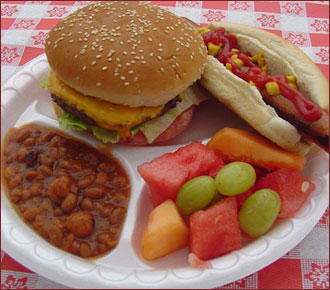
Fun for the entire family. Hot dogs, hamburgers, and sodas provided by AFSCME Local 965..

Monday, July 19, 2010

UA Enrollment Rises, but Problems Not Addressed

The University of Arkansas is predicting another record enrollment year for the fall of 2010, but the administration is not addressing the concerns about additional faculty needs or compensation plans for existing staff. Last year the official enrollment was 19,849 for the fall semester. This year more than 20,700 students are expected to enroll. A record number of new freshmen are also expected to choose the University of Arkansas. So far 3,458 degree seeking freshmen have enrolled, an increase of 500 over fall 2009 and well above the 2015 goal of 3,350. The exact enrollment numbers will not be known until the 11th day of the fall semester when the enrollment “snapshot” is taken, as required by state law, but all indicators point to record growth.

“It’s exciting. These numbers are right where we want them to be,” said Chancellor G. David Gearhart. “We know that we can best serve the interests of the students and of the state by growing in the right way. We are attracting talented students from across Arkansas and the nation to our state’s flagship campus. They have heard our message—that we are a Students First university— working energetically and creatively to help them succeed in our classrooms and in the world beyond.”

If the University of Arkansas truly puts students first and wants them to succeed in the classroom, the administration must make the financial commitment to hire additional tenure-track faculty, instead of trying to cover the new classes with part-time adjunct faculty and graduate teaching assistants. Chancellor Gearhart did not announce funding for additional faculty to teach the 900 new students expected.

“We have been preparing for this increase since November,” said Provost Sharon Gaber. “We have expanded the number of sections in core classes to meet the demand. We have renovated residence halls and we are increasing classroom availability. We are also thinking about retention as well as enrollment, adding staff to the Office of Academic Success and to the Office of Financial Aid. We want to be sure students receive support in areas that we know are key to their continued success. We are bringing in students who have great potential and we will do our part to help them realize it.” Although preparing for the increase since November, Provost Gaber said nothing about hiring additional faculty to teach the students. It is commendable that she plans to hire additional support staff, but she should also consider additional maintenance and custodial staff and assuring that current staff are given the raises that they were promised.

Most of the Arkansas students in the incoming freshmen class will have support from the Arkansas Challenge Scholarship Program, funded by the state lottery. Those who do not will be encouraged to apply for the scholarship in the spring. These scholarships have clearly contributed to increases in the number of in-state students, who will likely be joined by a record number of out-of-state students as well, said Suzanne McCray, vice provost for enrollment services.

“The University of Arkansas is becoming a destination school for students across the state and across the country as out reputation grows nationally. Prospective students are much better informed now about the importance of picking the college that is the right fit for them and they are starting earlier and taking longer to make their decision. We benefit from that approach. The more students know about the University of Arkansas the more likely they are to come here. The number of people who visit our campus has tripled. Once students and their families see our facilities, meet with faculty and students, get a sense of the community and the special opportunities we have to offer then they are persuaded.”

McCray said that the enrollment gains are anticipated in every college at the university. The College of Education and Health Professions has already enrolled more students than predicted. The J. William Fulbright College of Arts and Sciences, the College of Engineering and the Sam M. Walton College of Business will also hit record undergraduate numbers. The Honors College is also expecting to have a record number of students, which is evidence of the quality of the incoming freshman class. The graduate school and law school anticipate small enrollment gains.

Sunday, July 4, 2010

House Passes Education Funds, Gulf Cleanup, and Collective Bargaining for Public Safety Officers


On July 1, the House passed by a vote of 239-182 its version of legislation funding for two critical education programs, FEMA funds to clean up the BP oil spill in the Gulf, and a provision to extend federal collective bargaining rights to public safety officers. John Boozman (R-AR3) was the only Arkansas Congressman to vote against it.

The $10 billion education jobs fund included in the bill would help struggling schools prevent 140,000 layoffs and harmful education program cuts. AFSCME led a coalition of groups in support of the needed education funds. Further, $4.95 billion to pay off most of the Pell grant funding shortfall would protect over eight million college students from having their grants reduced. The bill also provides funding for Federal Emergency Management Agency (FEMA) disaster relief, Haiti, the Gulf Coast oil spill, Vietnam veterans suffering from Agent Orange, as well as $701 million for border security, $163 million for schools or military installations, and $50 million for the Emergency Food Assistance Program. Domestic needs are fully offset with recessions of unspent funds.


The collective bargaining provision would cover public safety officers, one of the few groups of workers not covered by federal collective bargaining rights. It establishes minimum collective bargaining rights for public safety officers including: (1) the right of workers to form a union and bargain over hours, wages, and terms and conditions of employment; (2) an impasse resolution mechanism, such as mediation, fact-finding or arbitration; and (3) the ability to have these basic rights enforced, including the right of the two parties to sign legally enforceable contracts.

Monday, June 21, 2010

UA Employees Take Another Hit


Following on the news that University of Arkansas employees will get no merit raises or service awards this year, the UA Administration has also announced that workers will have to pay more for health care and dental care benefits. Health insurance costs to workers and their families will go up by 5% and dental insurance costs will be increased by 3%.

The increases in the amount that employees must pay for health and dental insurance means that workers will have to choose between giving up benefits or taking home smaller paychecks for their families. Classified employees have had their wages frozen for next year, and faculty will not get merit raises for the second straight year.

Chancellor David Gearhart will get an additional $225,000 annually in deferred compensation from "private" funds through the UA Foundation. There was no consideration of deferred compensation for workers who have had their salary frozen and health insurance rates increased.

Sunday, June 20, 2010

UA Workers Salaries Frozen


On Friday, June 18, UA Chancellor G. David Gearhart sent University workers an email stating that he just learned on Thursday, June 17, “that the Governor’s freeze on state raises did, in fact, apply to higher education. This information has caught the entire higher education community by surprise.”

How that could have been a surprise instead of a delayed announcement is puzzling. Last month, the Director of the state Department of Finance and Administration sent a memorandum to all “Presidents/Chancellors of State Supported Institutions of Higher Education” specifically stating, that “annual career service recognition payments and classified and unclassified employee merit increases will be suspended for 2011.”

This is especially burdensome for low wage workers who already struggle. It also means that faculty will get no merit increases for the second consecutive year, because Gearhart recommended and the Board of Trustees voted to give no faculty raises last year. Of course, all employees will still be evaluated annually, even if these reviews are financially meaningless for the workers.

The UA Board of Trustees on May 21st voted to raise Chancellor Gearhart’s salary from $282,000 to $289,000 and voted to throw in an additional $225,000 annual deferred compensation payment from the UA Foundation. We’re not sure how the Board of Trustees can make expenditures of that magnitude from a “private” foundation, but they did.

Will Chancellor Gearhart now decline his $232,000 annual raise for next year, or is this salary freeze just for the workers? We will wait for his next empathetic email before guessing.

Monday, May 24, 2010

Two Members Honored by Sierra Club


The Arkansas Sierra Club honored two members of AFSCME Local 965 at their annual awards banquet last night. Mayor Lioneld Jordan, past president of Local 965, received the environmental group's top award, "Conservationist of the Year." In making the presentation, Sierra Club President Rob Leflar cited Jordan's outstanding leadership for low impact development, energy conservation, and expansion of the trails system, as well as his voting record during eight years on the city council, and called him "the Greenest Mayor in Arkansas."

State Representative Lindsley Smith received the award for Outstanding State Elected Official. Leflar noted that she had a 100% Sierra Club voting record during her three terms in the legislature and had sponsored successful legislation, including an anti-SLAPP statute to protect critics of developers, a "Net Metering" statute that allowed individuals to sell alternative energy to electric utilities, and expansion of the wetlands mitigation bank to include other aquatic resources.

Friday, May 21, 2010

Spring Community Service Day


AFSCME Local 965 members will spend Saturday morning, May 22, volunteering for litter pickup and removal at Greathouse Park in south Fayetteville. With the end of the school year, the park will be more heavily used by neighborhood youngsters, so let's help make it a safe and enjoyable experience for them.

Members should arrive by 8:00 a.m. for the project that includes the six-acre playground areas as well as removing debris from the creek. Recent utility work has had an adverse impact on the public areas. Equipment and supplies will be provided.

Directions: Greathouse Park is located south of 15th St. Turn south off 15th Street onto Brooks Ave. (Brooks is opposite of the Pinnacle Foods plant & runs along the RV Lot on the opposite corner from Baum Stadium). Then turn left onto Boone St & go a block to the parking lot at the corner of Boone St. & Price Ave.

Hope to see you there!!!

UPDATE: Brother Lioneld Jordan, Mayor of Fayetteville, joined us for the park cleanup. Photo above by Sister Betty Martin, President of Local 965, shows Mayor Jordan with some of the other union members participating in the community service project. L to R: Rick Belt, Steve Smith, Lioneld Jordan, Bruce McNully, Larry West.

Friday, April 30, 2010

AFSCME Spring Picnic


AFSCME Local 965 will be hosting our Spring Picnic on Sunday, May 2, 10:00am to 2:00pm, at the Gardens Main Pavilon on Razorback Road across from Faciities Management. Free Food!! Hamburgers, Hot Dogs, Baked Beans, Chips, and Drinks! Fun!! All are Welcome. Bring the Family!!! Celebrate the end of the semester and International Workers Day.

New Location for Picnic. This is where the Football Season "Hog Pen" is, south of Bud Walton Arena and north of Lot 56.

Saturday, April 17, 2010

Officer Elections


Congratulations to our new officers for 2010-2011.
President Betty Martin;
Vice President Dwight Morris;
Treasurer Bruce McNully;
Secretary Theresa Sims.

Friday, April 2, 2010

Union-Made Easter Candy


Did you know Jelly Belly's, Peeps and Jelly Beans are union-made?

When you're searching for something for an Easter basket, why not buy union-made-in-America treats.

Here's a brief list of choices of candy products made by members of the Bakery, Confectionery, Tobacco Workers and Grain Millers International Union (BCTGM); snack foods by members of the United Food and Commercial Workers (UFCW); or fruit and nuts from members of the United Farm Workers of America (UFW).

Hershey Products Necco (New England Confectionery Company)
Hershey Kisses* Sweethearts
Hershey Syrups Mary Jane Peanut Butter Chews
Hershey Milk Chocolate Bar* NECCO Wafers/Necco Wafer Smoothies
Hershey Milk with Almond Bars Sky Bar
Hershey Special Dark Bars Clark Bar
Hershey Nuggets Canada Mints
Rolo Candy Cupboard
Hershey Kissables Thin Mints
Kit Kat Bars NECCO Assorted Junior Wafers
Carmello Bar Clark Junior Laydown Bag
Cadbury Fruit & Nut Bar Mary Jane Laydown Bag
Cadbury Roast Almond Bar Haviland
Cadbury Royal Dark Bar
Cadbury Dairy Milk Bar Ghiradelli Chocolates
Hershey Symphony Bar with Toffee All filled & non filled squares

non pariels

Just Born Chocolate chips
Peeps
Mike & Ike Gimbals Fine Candies
Hot Tamales JellyBeans
Peanut Chews Cherry Hearts

Scotty Dogs
Jelly Belly's Candy Company
Nestle
Jelly Bellies - also made in a non-union plants in Chicago/Taiwan Nestle Treasures
Chocolate Dutch Mints Laffy Taffy
Chocolate Temptations Kathryn Beich specialty candy
dimples Baby Ruth*
Goelitz Confections Butterfinger*
Goelitz Gummi Pearson's Nips
Pet Rat Famous Old Time Candies (gourmet chocolates)
Pet Tarantula
Sweet Temptations Pearson's Candy Co.
Candy Corn Salted Nut Roll
Licorice Nut Goodie
Malted Milk Balls Mint Patties
Chocolate Coated Nuts, and Sours Bun Bars
Sunkist Fruit Gel Slices

Anabelles Candy Company
American Licorice Boston Baked Beans
Black & Red Vines Jordon Almonds
Strawberry Ropes Rocky Road

U-Nos
Sconza Candies Look
Jawbreakers Big Hunk
Chocolate Covered Cherries Abbazabbz
Chocolate Yogurt Nuts & Fruit


Kraft Orville Redenbacher
snack products popcorn


Frito-Lay
chips and snacks

Monday, March 22, 2010

Union Prayer


Addie Wyatt, former officer of the United Food and Commercial Workers, used to start a meeting with this union prayer.


"Each of us is a link in this great union chain that stretches around the world. I will try every day to keep my link, united, active and strong."


Addie L. Wyatt (1924-)

Labor leader, civil rights pioneer, pastor

The first female board member of the United Packinghouse Food and Alliance Workers Union, Addie L. Wyatt was elected vice president of Local 56 in 1953. During her 30-year career as a labor leader Wyatt fought for equality as a campaigner for women's rights in the workplace and as an active protester alongside Dr. Martin Luther King Jr. in the early 1960s. She served as a member of President John F. Kennedy's Commission on the Status of Women and in 1976 became the first black woman labor leader of an international union when she was elected international vice president of the newly merged United Food and Commercial Workers International Union. A former Time magazine woman of the year (1975), Wyatt was inducted to the Civil Rights Walk of Fame in Atlanta, Georgia, in 2005.

Wednesday, March 17, 2010

Council Insults City Employees


The Fayetteville Civil Service Commission is responsible for examining and establishing eligibility lists for appointments and promotions within the Police and Fire Departments and acting upon appeals and disciplinary action taken by the Police and Fire Chiefs and the Mayor. To say it is unfriendly to the case of workers is an understatement. Not once in the last nine years has the Commission ever sided with an employee in an appeal.

Part of the problem is that the Commission has long been loaded up with Chamber of Commerce members who always side with management against city workers. For example, Fred Vorsanger, an employee of the Chamber is serving a term that will run through 2014. That's no wonder, really, because the official application for all City boards, commission, and committees asks whether the applicant heard about the opening from the Chamber of Commerce, so they can easily spot the business insiders.

Another serious problem is that the Secretary of the Board, William Brown, is the father of Police Captain William "Casey" Brown, whose disciplinary decisions against officers are subject to appeal to his father. How fair is that? None of his fellow Commissioners ever saw any conflict or raised the issue. None of them are known for showing much concern for employees or giving them a fair hearing.

Last night, the City Council nominated and unanimously approved, without debate, the appointment of Buddy Chadick, a distinguished citizen and a partner in the Bassett Law Firm. He has long experience in representing Tyson Foods and other corporations in fighting and appealing to deny Workers Compensation claims of injured workers; there is no record that he has ever represented an injured worker seeking medical expenses or any employee in an employment discrimination case. Mr. Chadick is a fine fellow, but he is an absolutely awful appointment to the Civil Service Commission that is supposed to be impartial and give employees a fair shake.

Chadick's appointment to a term that will run until 2016 is an insult to city employees and a poor reflection of the due diligence and concern for fairness by the members of the City Council.

Tuesday, March 16, 2010

Time for Action on Health Care Reform


This is the week we've been waiting for — the week when members of the House of Representatives choose to stand with us or the insurance companies.

The insurance industry operatives and Republican talking heads you see on cable TV say we need to start over and spend another year — or another decade — before we pass reform. They twist the facts to say that the public opposes reform, but what the public really opposes are attempts to water down or kill reform to keep the insurance companies happy.

AFSCME members like you are fighting the good fight and have been a critical voice for the past year in the health insurance reform debate. Together, we've made literally tens of thousands of phone calls and sent even more emails to our senators and representatives. The insurance industry has deep pockets and is doing all it can to kill reform — but we won't let them win. This is our moment.

The bill that the House will soon vote on would end the ability of insurance companies to deny coverage to those who have pre-existing conditions — or deny coverage when you get sick. It would require insurance companies to pay for preventive care. It would also allow parents to keep their unemployed children on their policies until they turn 26. And it would end taxpayer funded subsidies to Big Insurance.

The historic nature of this moment cannot be overstated. The opportunity to end insurance company abuses is a moment for which we have worked long and hard. It is a vote that will affect our children, and their children. Please take a moment now to contact your member of Congress. Tell him/her the time has come to stand up to the insurance companies. The time has come to pass health care reform.

Please go to: http://www.unionvoice.org/cam paign/stand_up_for_reform

Thanks to you, when the history books are written on this struggle, they will read: AFSCME was there.

In solidarity,

Gerald W. McEntee
International President

Sunday, February 28, 2010

Fayetteville Gets Green Job Training Center


Fulfilling Mayor Lioneld Jordan's dream of a Green Jobs Training Center in Fayetteville, Governor Mike Beebe announced on Thursday a $1.3 million grant for the program to be conducted by NorthWest Arkansas Community College. The facility is scheduled to be opened this summer.

Pictured above at the announcement in Little Rock are Rick Mayes (NWACC Director of Building Sciences), Stephen Smith (President, Northwest Arkansas Labor Council), Alderman Sarah Lewis, Mayor Lioneld Jordan, Dr. Becky Paneitz (President, NWACC), State Representative Lindsley Smith, Steve Clark (President, Fayetteville Chamber of Commerce), and Professor Panneer Selvam (UA College of Engineering).

Mayor Lioneld Jordan, NWA Labor Council President Stephen Smith, and Representative Lindsley Smith are members of AFSCME Local 965.